
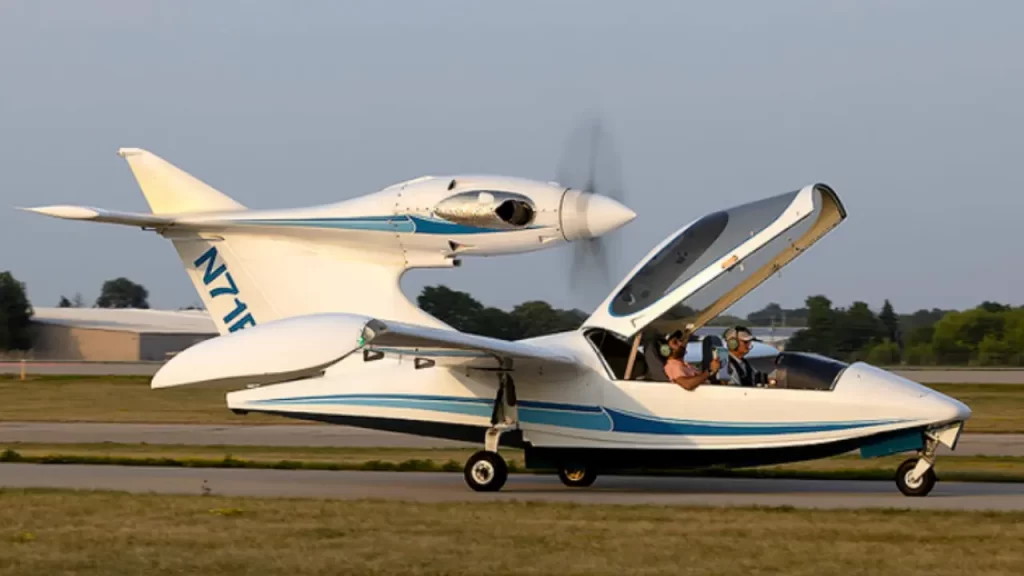
Amphibious aircraft design is a constant compromise between air and water performance. Shape directly influences drag force, lift force, water take-off behavior, and landing safety. Hull geometry, wing placement, and material selection determine success. Aircraft like the SuperSeawind demonstrate how careful aerodynamic and hydrodynamic integration leads to efficient, predictable, and versatile operations.
Introduction: The Aerial Boat Paradox
An amphibious aircraft must operate efficiently in two fundamentally different environments: air and water. The same shape that flies at high speed must also plane, accelerate, and land safely on a fluid surface. Understanding why aerodynamic and hydrodynamic shaping matters explains why refined designs, such as the SuperSeawind N71RJ, achieve balanced real-world performance while others struggle during water operations or cruise flight.
The Fundamental Conflict: Air vs. Water Requirements
In the air, aerodynamic efficiency depends on smooth surfaces, delayed flow separation, and controlled pressure gradients. Designers rely on parameters such as the Reynolds number to predict airflow behavior over wings and the aircraft fuselage, reducing drag force and improving fuel economy. In contrast, water operations introduce hydrodynamic drag, wave interaction, and complex hydrodynamic force effects. Concepts like the Froude number help engineers understand planing behavior, spray formation, and resistance during acceleration. The challenge lies in designing a single shape that performs acceptably in both environments without excessive compromise.
The Amphibious Fuselage: A Masterclass in Compromise
The fuselage of an amphibious aircraft doubles as a hull, making it central to both aerodynamic and hydrodynamic performance. Hull geometry governs buoyancy requirement, hydrodynamic lift, and stability during taxi and water take-off, while also influencing cruise drag. Factors such as length-to-beam ratio, trim angle, and trim limits determine whether the aircraft transitions smoothly onto the step or wastes energy fighting hull resistance. The SuperSeawind’s integrated composite hull illustrates how refined shaping can minimize spray, manage the water resistance coefficient, and maintain a clean aerodynamic profile in flight. Proper chines and planing surfaces reduce spray ingestion and protect the propeller and tail during rough-water operations.
Wings and Control Surfaces: Engineered for Dual Duty
Wings on amphibious aircraft must generate sufficient lift force at low speeds to shorten water runs while remaining efficient at cruise. High-lift configurations and optimized wing camber improve acceleration and rotation during takeoff. Wing placement is equally critical, as poor positioning can direct spray toward the propeller or control surfaces. Tail design plays a major role in pitch stability, especially during transitions between displacement and planing regimes. In aircraft such as the SuperSeawind, careful tail geometry helps manage pitch changes, reduces the risk of seaplane porpoising, and maintains control authority during both water and air phases.
Floats, Retractable Systems, and Hydrodynamic Integration
Traditional external floats add significant aerodynamic drag and reduce cruise efficiency. Modern amphibious aircraft increasingly favor integrated hulls or retractable floats to preserve clean airflow once airborne. While concepts such as hydrofoils or air cushion effects can reduce hydrodynamic drag during takeoff, they introduce complexity, weight, and maintenance challenges. The SuperSeawind approach prioritizes simplicity and reliability, achieving strong water performance without compromising aerodynamic efficiency or structural durability.
The Critical Phases: Take-off, Landing, and Stability on Water
Water operations are where shape matters most. During water take-off, the aircraft must overcome spray drag, wave interaction, and rising hydrodynamic lift as speed increases. A well-shaped hull transitions smoothly to planing, reducing takeoff distance and stress on the structure. During water entry and landing runs, fuselage geometry controls slamming impact, water impact pressure, and overall slamming loads. Improper trim or center-of-gravity positioning can trigger unstable oscillations known as porpoising, a dangerous porpoising regime caused by aerodynamic and hydrodynamic interaction. Refined designs like the SuperSeawind show how balanced geometry improves safety and predictability during these critical phases.
Design Challenges and Advanced Optimization
Designing an amphibious aircraft is a multidisciplinary task involving aerodynamics, ship hydrodynamics, structures, and materials. Engineers use computational fluid dynamics, CFD analysis, and finite element method tools to simulate airflow, wave interaction, and fluid-solid interactions before physical testing. Modern composite materials offer improved stiffness, corrosion resistance, and weight savings, enhancing hydrodynamic efficiency and long-term durability. Advanced optimization techniques allow designers to refine every surface, ensuring the aircraft performs consistently across varying water and atmospheric conditions.
Conclusion: The Art and Science of Amphibious Shape
The success of an amphibious aircraft is inseparable from its shape. Aerodynamics and hydrodynamics together dictate efficiency, safety, and mission versatility. From hull geometry and wing placement to materials and optimization methods, every design decision affects performance in both air and water. Aircraft such as the SuperSeawind N71RJ demonstrate how thoughtful integration of these principles results in strong cruise capability, predictable water handling, and real-world operational confidence. For readers interested in how these engineering decisions come together in practice, The Legacy of N71RJ offers deeper insight into the design philosophy behind one of the most refined modern amphibious aircraft.