
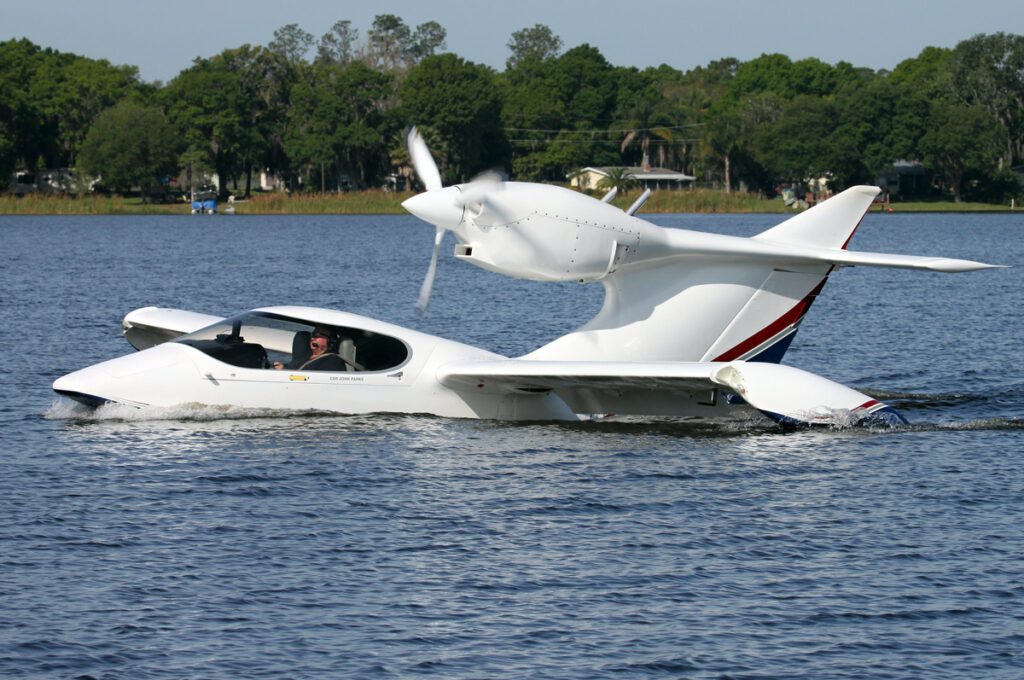
The Super Seawind is an advanced amphibious aircraft built with safety at its core through thoughtful aircraft design, robust composite materials, redundant systems, and pilot-focused engineering. Its structure, systems, and operational philosophy reflect lessons learned from real-world water flying and long-range operations, making safety an integral part of every flight rather than an added feature.
Introduction: Setting the Benchmark for Amphibious Safety
Amphibious aviation demands more from aircraft design than land-only flight. Operating between runways and water requires strength, reliability, and intelligent engineering. The Super Seawind represents a modern approach to safety-focused aircraft design, where performance and protection are developed together rather than treated as trade-offs.
The Seawind Legacy of a Safety-First Philosophy
From its earliest designs, the Seawind lineage emphasized stability, predictability, and pilot confidence. This safety-first philosophy continues in the Super Seawind, where engineering decisions are guided by operational realism rather than marketing claims. The aircraft is designed to support pilots flying in varied environments, including extended overwater segments and offshore cruising scenarios.
The Super Seawind: A Synthesis of Water and Flight Safety
The Super Seawind blends principles from both aviation and marine operations. Water flying introduces unique variables such as surface conditions, spray, and corrosion exposure. The aircraft’s design reflects an understanding of these challenges, ensuring that safety considerations extend beyond the runway and into real amphibious use.
Unyielding Structural Integrity: The Foundation of Super Seawind Safety
Advanced Composite Materials for Resilience
The Super Seawind makes extensive use of composite materials, carefully selected for strength, durability, and weight efficiency. These materials allow smooth aerodynamic surfaces while maintaining structural integrity during repeated water operations. The composite structure also supports long-term durability in demanding environments.
Engineering for Real-World Operating Conditions
Rather than relying on headline numbers, the Super Seawind’s structure is shaped by engineering evaluation and operational experience. Its airframe is designed to manage aerodynamic loads, water impact forces, and repeated amphibious cycles while maintaining predictable handling throughout the flight envelope.
Proactive Design: Preventing Hazards Before They Arise
Elevated Visibility and Situational Awareness
Visibility plays a major role in amphibious safety. The Super Seawind’s cockpit layout and canopy design enhance forward and lateral visibility, supporting better situational awareness during water approaches, docking, and low-altitude maneuvering where visual cues matter most.
Predictable Handling and Control
Handling characteristics are tuned to remain stable and predictable across a wide range of speeds. This predictability helps reduce pilot workload during demanding phases such as water takeoff, landing, and transition to flight, especially in variable surface conditions.
Redundancy and Emergency Preparedness
Reliable Power and System Design
The Super Seawind’s systems are arranged with redundancy and accessibility in mind. Critical systems are designed to remain manageable under abnormal conditions, allowing pilots time to assess situations rather than react instantly. This philosophy supports safer decision-making during unexpected events.
Advanced Avionics for Awareness
Modern advanced avionics, including integrated glass cockpit systems such as the Garmin G900X, support navigation, terrain awareness, and system monitoring. These tools help pilots maintain awareness during overwater flight, reduced visibility, or complex airspace operations.
Operational Excellence in Everyday Use
Ergonomic Cockpit and Crew Safety
The cockpit layout emphasizes ergonomics, reducing fatigue on longer flights. Controls, displays, and seating are arranged to support comfort and attentiveness, which directly contributes to safer operations during extended missions or repeated water landings.
Payload Management and Balance
The Super Seawind’s payload capacity and cargo bay design allow pilots to manage weight and balance effectively. Proper load distribution supports stable handling both in flight and on the water, reinforcing safety during all phases of operation.
Seamless Amphibious Transitions
The aircraft’s landing gear system is engineered for smooth transitions between land and water operations. Clear indications and disciplined procedures help reduce the risk of configuration errors, one of the most critical safety factors in amphibious flying.
The Proof in Performance: Validation Through Use
Rather than relying on certification labels, the Super Seawind’s safety reputation is built through operational experience, engineering evaluation, and continuous refinement. Its design reflects lessons learned from real flights, maintenance cycles, and pilot feedback, ensuring that safety evolves alongside performance.
Beyond Engineering: A Culture of Safety
Safe aircraft still depend on prepared pilots. Training, discipline, and respect for water operations remain essential. The Super Seawind supports this culture by providing pilots with systems and handling qualities that reward preparation and sound judgment rather than masking poor decisions.
Conclusion: Peace of Mind on Every Adventure
Safety in amphibious aviation is never the result of a single feature. It comes from thoughtful design, disciplined operation, and continuous learning. The Super Seawind demonstrates how integrated engineering, system redundancy, and pilot-focused design can make water flying safer and more manageable. For those seeking deeper technical insight into the philosophy and engineering journey behind N71RJ, The Legacy of N71RJ serves as a practical reference—offering context and lessons that complement the principles discussed here without replacing hands-on training or experience.